

Hey there! I'm an artificial bonsai supplier, and today I wanna chat about a super interesting topic: Are artificial bonsais affected by temperature?
Let's start by getting a bit of background. Artificial bonsais have become super popular in recent years. They're a great option for people who love the look of bonsais but don't have the time or the green thumb to take care of real ones. Whether it's for home decor, office spaces, or even Artificial Bonsai for Museum displays, artificial bonsais offer a long - lasting and low - maintenance alternative.
Now, let's dig into the temperature thing. First off, the materials used to make artificial bonsais play a huge role. Most artificial bonsais are made from a combination of plastic, silk, and sometimes wire for the structure. These materials have different properties when it comes to temperature.
Plastic is one of the most common materials. It's pretty durable, but extreme temperatures can have an impact. In high temperatures, plastic can start to warp or melt. You know how sometimes you leave a plastic toy in the sun for too long, and it gets all bendy? The same thing can happen to artificial bonsais. If you place an artificial bonsai in a spot where it's exposed to direct sunlight for long periods, especially in the summer when it's scorching hot, the plastic parts might start to lose their shape.
On the other hand, in very cold temperatures, plastic can become brittle. It's like when you take a plastic container out of the freezer, and it feels a lot more fragile. For artificial bonsais, this brittleness can lead to parts breaking off easily. So, if you live in an area with really cold winters and you keep your artificial bonsai outside, there's a risk that the branches or leaves made of plastic could snap.
Silk is another material often used for the leaves of artificial bonsais. Silk is more delicate compared to plastic. High temperatures can cause the color of the silk to fade. Just like how your favorite silk shirt might lose its vibrant color if you leave it in the sun for too long. And in cold temperatures, silk can become stiff. This stiffness can make the leaves look less natural and more rigid.
The wire used in the structure of artificial bonsais is usually made of metal. Metal expands in high temperatures and contracts in cold temperatures. When it expands, it can put pressure on the other parts of the bonsai, potentially causing them to come loose. And when it contracts in cold weather, there's a chance that the wire could break if it's under too much stress.
But it's not all doom and gloom. There are ways to protect your artificial bonsais from the negative effects of temperature. If you're worried about high temperatures, you can place your artificial bonsai in a shaded area. For example, if you have an Artificial Chinese Bonsai in your garden, move it under a tree or a patio umbrella during the hottest parts of the day.
In cold weather, you can bring your artificial bonsai indoors. If you have an Artificial Japanese Bonsai that you usually keep on your balcony, just move it inside your house when the temperature drops. This way, you can prevent the plastic from becoming brittle and the silk from getting stiff.
Now, let's talk about different environments. In a home setting, the temperature is usually pretty stable. Central heating in the winter and air - conditioning in the summer keep the indoor temperature within a comfortable range. So, artificial bonsais placed indoors are less likely to be affected by extreme temperatures. However, you still need to be careful about placing them near heat sources like radiators or fireplaces. The heat from these sources can be intense and cause the same problems as high outdoor temperatures.
In commercial settings, such as offices or museums, the temperature is also controlled. But sometimes, there can be fluctuations. For example, in a museum, when there are a lot of people visiting, the body heat can raise the temperature in the room. And if the ventilation isn't good, the artificial bonsais on display might be exposed to higher temperatures than normal. In an office, if the air - conditioning breaks down during a hot summer day, the artificial bonsais could be at risk.
So, what does all this mean for us as artificial bonsai suppliers? Well, we need to make sure that we're providing our customers with high - quality artificial bonsais that can withstand a reasonable range of temperatures. We also need to educate our customers about how to take care of their artificial bonsais in different temperature conditions.
If you're thinking about buying an artificial bonsai, keep these temperature factors in mind. Make sure you choose a spot in your home or office where the temperature is relatively stable. And if you have any questions about the temperature resistance of our artificial bonsais, don't hesitate to reach out.
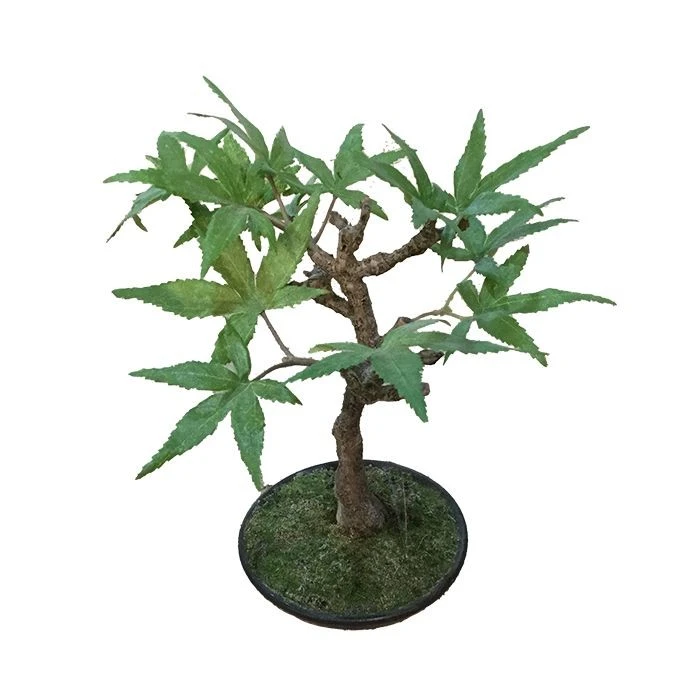

We offer a wide range of artificial bonsais, from Artificial Chinese Bonsai with their unique cultural significance to Artificial Japanese Bonsai that bring a touch of elegance. And our Artificial Bonsai for Museum collection is perfect for those looking for a high - end display option.
If you're interested in purchasing artificial bonsais for your home, office, or any other space, we'd love to have a chat with you. We can discuss your specific needs, the best placement for your artificial bonsais, and how to ensure they last for a long time. Just drop us a line, and we'll get back to you as soon as possible.
References:
- General knowledge about the properties of plastic, silk, and metal in different temperatures.
- Personal experience as an artificial bonsai supplier dealing with customer feedback on temperature - related issues.
