

Do artificial Chinese bonsais have a smell? That's a question I get asked quite a bit as a supplier of Artificial Chinese Bonsai. It might seem like a simple query, but the answer is a bit more complex and interesting than you might think.
Let's first talk about what artificial Chinese bonsais are. These are meticulously crafted replicas of the real - deal Chinese bonsai trees. Chinese bonsai is an ancient art form that dates back over a thousand years. It involves shaping and training real trees to create miniature masterpieces that mimic the grandeur and beauty of nature in a small pot. Our artificial versions are designed to capture that same essence, with carefully crafted leaves, branches, and trunks that look incredibly lifelike.
Now, to the big question: do they have a smell? Well, in general, artificial Chinese bonsais are made from a variety of materials like plastic, silk, and sometimes even synthetic faux - wood. These materials are chosen for their durability, flexibility, and ability to look realistic. And most of the time, these materials don't have a strong, noticeable smell on their own.
When the artificial bonsais are first produced, there might be a very faint odor due to the manufacturing process. For example, during the molding of plastic parts or the treatment of silk materials, there could be some residual chemicals that give off a light scent. But rest assured, this smell is usually temporary and will fade away within a few days after you unpack the bonsai. You can speed up this process by leaving the bonsai in a well - ventilated area for a while.
On the other hand, if you're looking for an actual "scented" artificial Chinese bonsai, that's a bit different. Some manufacturers might add a very light, artificial fragrance to the bonsai to mimic the natural smell of a real tree. This is done very subtly, though, because you don't want an overpowering perfume that ruins the natural aesthetic of the bonsai.
The smell factor also varies depending on the quality of the artificial bonsai. Cheaper, lower - quality ones might have a more persistent and unpleasant odor, as they might use lower - grade materials that contain more chemicals. As a supplier, I always recommend investing in a higher - quality artificial Chinese bonsai. While they might cost a bit more upfront, you'll get a product that looks better, lasts longer, and is less likely to have a bad smell.
Now, let me tell you about some of the other great options in our artificial bonsai range. We also offer Artificial European Bonsai. European bonsai styles have their own unique charm, often featuring a more open and airy aesthetic compared to the more compact Chinese styles. Our artificial European bonsais are just as detailed and realistic, and they can be a great addition to any home, office, or outdoor space.
If you're more into the Japanese style, check out our Artificial Japanese Bonsai. Japanese bonsai is known for its simplicity and harmony with nature. Our replicas capture the essence of Japanese aesthetics, with their elegant curves and carefully arranged foliage.
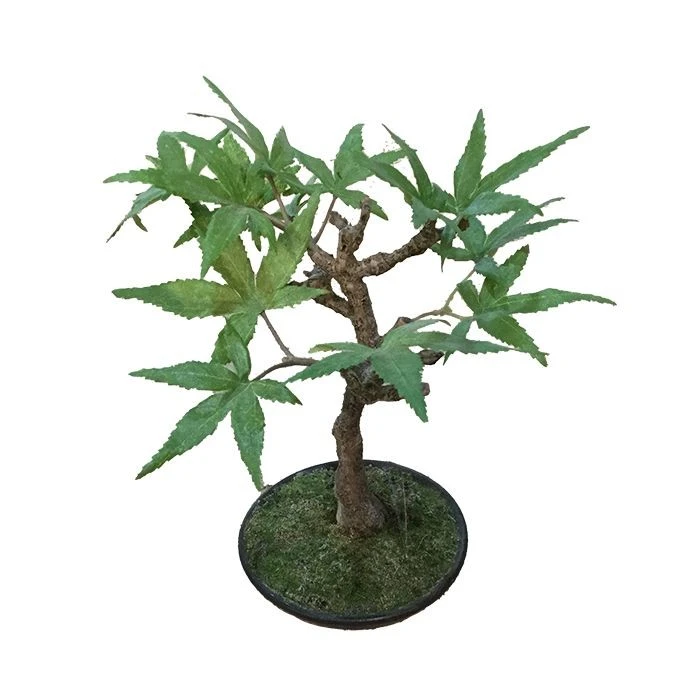

And for those who are involved in museums or other public spaces, we have Artificial Bonsai for Museum. These are especially crafted to meet the high - end needs of museum displays. They are extremely realistic, and since they don't require watering or pruning, they are a great long - term solution for museum exhibits.
One of the great things about artificial bonsais, whether it's Chinese, European, or Japanese, is that they offer a lot of flexibility. You don't have to worry about watering them, fertilizing them, or protecting them from pests. They look great all year round, no matter the season. And as for the smell, as I mentioned earlier, any initial odor is usually short - lived.
If you're in the market for artificial bonsais, whether it's for personal use, for a business, or for a museum display, I'd love to have a chat with you. We can discuss your specific needs, the style you prefer, and find the perfect artificial bonsai for you. I'm always available to answer any questions you might have and help you make the right choice. Just reach out, and we can start talking about how to bring the beauty of these timeless bonsai styles into your space.
In conclusion, artificial Chinese bonsais generally don't have a strong, persistent smell. Any odor is usually related to the manufacturing process and will fade quickly. And with a wide range of other artificial bonsai options available in our collection, you're sure to find something that suits your taste and requirements. So why wait? Let's get started on finding the perfect artificial bonsai for you!
References
Some knowledge about materials and manufacturing processes of artificial bonsais is based on common industry practices and my experience as a supplier of Artificial Chinese Bonsai. Information about different bonsai styles (Chinese, European, Japanese) is drawn from general knowledge of bonsai art history and aesthetics.
