

As a supplier of Artificial Chinese Bonsai, I've witnessed firsthand the growing interest in these unique and beautiful creations. In this blog, I'll explore the future development potential of artificial Chinese bonsais, considering various aspects such as market trends, technological advancements, and cultural significance.
Market Trends and Demand
The global market for artificial plants has been expanding steadily in recent years, driven by factors such as urbanization, busy lifestyles, and the increasing popularity of interior decoration. Artificial Chinese bonsais, with their intricate designs and symbolic meanings, are well - positioned to benefit from this trend.
Consumers today are looking for low - maintenance yet aesthetically pleasing alternatives to real plants. Artificial Chinese bonsais offer just that. They don't require watering, pruning, or sunlight, making them ideal for people living in apartments or those with limited time for plant care. Moreover, they can be placed in any environment, including offices, shopping malls, and homes, without the worry of seasonal changes or pests.
The demand for artificial plants in the home decor market is particularly strong. People are using them to add a touch of nature and tranquility to their living spaces. Artificial Bonsai for Home has become a popular choice, as it can create a focal point in a room or enhance the overall theme of the decor. In addition, the hospitality industry, including hotels and restaurants, is also a significant market for artificial Chinese bonsais. They can be used to create a more inviting and relaxing atmosphere for guests.
Technological Advancements
One of the key factors contributing to the future development of artificial Chinese bonsais is technological advancements. In recent years, there have been significant improvements in the materials and manufacturing processes used to create artificial plants.
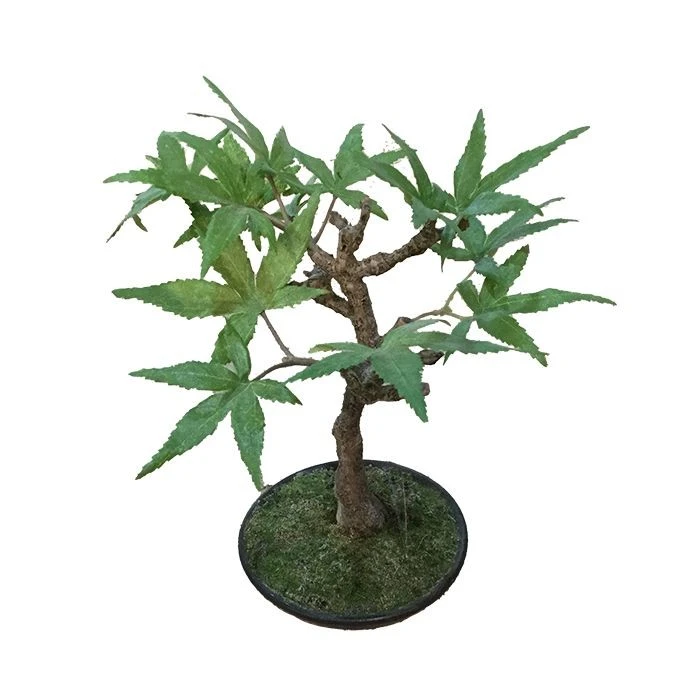
New materials such as high - quality plastics, silicones, and fabrics are being used to make artificial bonsais look more realistic. These materials can mimic the texture, color, and shape of real plants with astonishing accuracy. For example, the leaves of artificial Chinese bonsais can now have veins and a natural sheen, making them almost indistinguishable from real ones at a glance.
Manufacturing techniques have also evolved. Advanced molding and 3D printing technologies allow for more detailed and complex designs. This means that artificial Chinese bonsais can now be created in a wider range of styles and sizes, catering to different customer preferences. For instance, traditional Chinese bonsai styles such as the formal upright, slanting, and cascade styles can be accurately replicated in artificial form.
In addition, technology is also being used to improve the durability and longevity of artificial Chinese bonsais. UV - resistant coatings can be applied to prevent fading, and fire - retardant materials can be used for added safety. These advancements make artificial Chinese bonsais a more reliable and long - term investment for consumers.
Cultural Significance
Chinese bonsai has a long - standing cultural significance that dates back over a thousand years. It is not just a form of art but also a way of expressing philosophical and spiritual ideas. Artificial Chinese bonsais can help to preserve and spread this rich cultural heritage.
In Chinese culture, bonsai represents harmony, balance, and the relationship between man and nature. By offering artificial Chinese bonsais, we can make this cultural symbol more accessible to a global audience. People from different countries and cultures can appreciate the beauty and meaning of Chinese bonsai without the need for in - depth knowledge of plant care.
Furthermore, artificial Chinese bonsais can be used in educational settings to teach about Chinese culture and art. They can be displayed in museums, cultural centers, and schools, providing a tangible example of traditional Chinese bonsai techniques. This helps to promote cross - cultural understanding and appreciation.
Global Expansion
The market for artificial Chinese bonsais is not limited to China. There is a growing demand for these products in international markets, especially in Europe, North America, and Asia - Pacific.
In Europe, the trend of bringing nature indoors is on the rise, and artificial Chinese bonsais fit perfectly into this lifestyle. Consumers in countries like the United Kingdom, Germany, and France are increasingly interested in unique and decorative items for their homes and offices.
North America also offers significant growth potential. The large population and high disposable income in the United States and Canada make it an attractive market. In addition, the growing interest in Asian culture in North America has led to an increased demand for Chinese - inspired products, including artificial Chinese bonsais.
In the Asia - Pacific region, countries like Japan, South Korea, and Australia are showing a strong interest in artificial plants. Artificial Japanese Bonsai has been popular in these markets, and there is an opportunity to introduce artificial Chinese bonsais as a complementary product.

Challenges and Solutions
Despite the promising future development potential, there are also some challenges that need to be addressed. One of the main challenges is the perception that artificial plants are of lower quality compared to real ones. To overcome this, we need to continue to invest in research and development to improve the realism and quality of artificial Chinese bonsais. Marketing and education campaigns can also be used to inform consumers about the benefits and advancements of artificial plants.
Another challenge is competition from other types of decorative items. To stand out in the market, we need to focus on innovation and differentiation. This can include developing new designs, offering customization options, and providing excellent customer service.
Conclusion
In conclusion, the future development potential of artificial Chinese bonsais is very promising. The combination of market trends, technological advancements, cultural significance, and global expansion opportunities makes it a lucrative and exciting industry.
As a supplier of Artificial Chinese Bonsai, I am committed to providing high - quality products that meet the diverse needs of our customers. Whether you are a home decorator, a hotel manager, or a cultural institution, we have the right artificial Chinese bonsai for you.
If you are interested in our products or would like to discuss a potential purchase, please feel free to reach out. We are looking forward to establishing a long - term business relationship with you and helping you bring the beauty of Chinese bonsai into your space.
References
- "The Art of Bonsai" by John Naka
- "Chinese Bonsai: History, Culture, and Techniques" by Liangyi Zhang
- Market research reports on the global artificial plant industry.
