

What is the quality standard of artificial bonsais?
As a supplier of artificial bonsais, I've spent years exploring the intricate details that define the quality of these unique decorative items. Artificial bonsais have gained significant popularity in recent years, finding their way into various settings, from museums to homes, due to their low - maintenance nature and long - lasting beauty. In this blog, I'll delve into the key aspects that constitute the quality standard of artificial bonsais.
Realism
One of the most crucial factors in determining the quality of an artificial bonsai is its realism. A high - quality artificial bonsai should closely mimic the appearance of a real bonsai tree. This starts with the shape and structure of the tree. The branches should be arranged in a natural and organic way, just as they would be on a living bonsai. For instance, the angle of the branches, their thickness, and the way they taper towards the ends all contribute to the overall realism.
The leaves also play a vital role. They should have the correct size, shape, and color for the specific type of bonsai tree being replicated. The texture of the leaves is equally important. A good artificial bonsai will have leaves with a realistic feel, whether it's the smoothness of a maple leaf or the roughness of a pine needle. The color of the leaves should not only be accurate but also show signs of natural variation, such as lighter and darker shades, to mimic the effects of sunlight and aging.
When it comes to the trunk, it should have the right bark texture. Whether it's the rough, gnarled bark of an old oak or the smooth bark of a young cherry tree, the artificial version should replicate it as closely as possible. The trunk should also have a natural curvature and taper, giving the impression of a living, growing tree.
Durability
Durability is another essential quality standard for artificial bonsais. These decorative pieces are often meant to last for a long time, so they need to be able to withstand various environmental conditions. The materials used in the construction of the artificial bonsai are key to its durability.
For the leaves, high - quality synthetic materials are typically used. These materials should be resistant to fading, even when exposed to sunlight for extended periods. This is especially important if the artificial bonsai is intended for outdoor use or in a room with a lot of natural light. The branches should be made of sturdy materials that can hold their shape over time. They should not break or bend easily, even if the bonsai is accidentally bumped or moved.

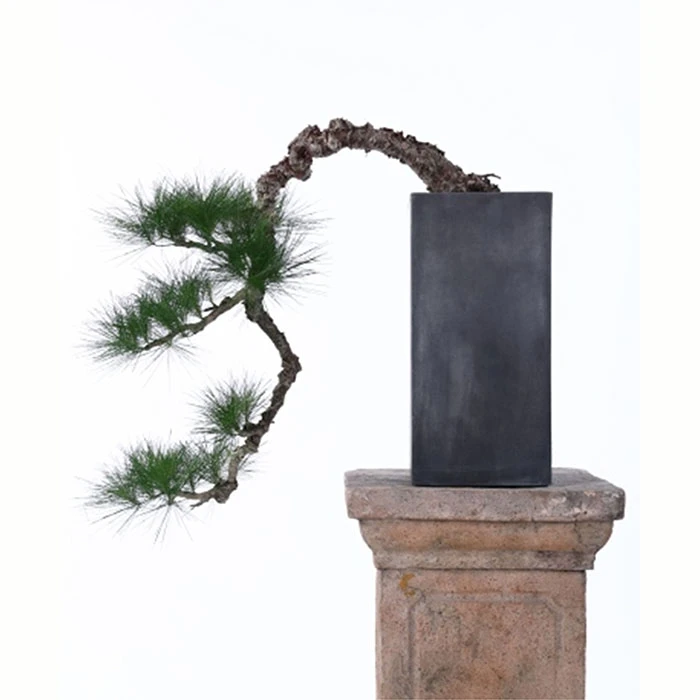
The pot or container in which the artificial bonsai is placed also contributes to its durability. It should be made of a strong material, such as ceramic or high - quality resin, that can protect the base of the tree and prevent damage. Additionally, the pot should be well - designed to ensure proper drainage, even though artificial bonsais don't require watering in the traditional sense.
Craftsmanship
The craftsmanship involved in creating an artificial bonsai can greatly affect its quality. Skilled artisans pay attention to the smallest details, ensuring that every part of the bonsai is carefully crafted.
The process of attaching the leaves to the branches should be seamless. There should be no visible glue or rough edges where the leaves are attached. The branches should be securely connected to the trunk, and the overall assembly of the tree should be stable.
In terms of the potting, the soil or substrate in the pot should look realistic. It can be made of materials that mimic the texture and color of real soil, and it should be arranged in a way that looks natural around the base of the tree. The addition of small decorative elements, such as rocks or moss, can also enhance the overall craftsmanship and realism of the artificial bonsai.
Customization
A high - quality artificial bonsai supplier should offer a certain degree of customization. Different customers have different needs and preferences, and the ability to customize the artificial bonsai can set a product apart.
Customers may want a specific type of bonsai tree, such as an Artificial European Bonsai, which has its own unique characteristics. They may also want to choose the size of the bonsai, the color of the leaves, or the style of the pot. A good supplier will be able to work with the customer to create a customized artificial bonsai that meets their exact requirements.
Application - Specific Quality
The quality requirements of artificial bonsais can vary depending on their intended application. For example, Artificial Bonsai for Museum need to meet a very high standard of realism and durability. Museums often display these bonsais for long periods, and they need to be able to withstand the scrutiny of visitors. They also need to fit in with the overall aesthetic of the museum, so the design and style of the artificial bonsai are crucial.
On the other hand, Artificial Bonsai for Home may focus more on creating a warm and inviting atmosphere. While realism and durability are still important, the color and style of the bonsai can be more in line with the home decor. For example, a home - style artificial bonsai may have brighter colors or a more whimsical design to add a touch of personality to the living space.
Maintenance - Friendliness
One of the main advantages of artificial bonsais is their low - maintenance nature. A high - quality artificial bonsai should be easy to clean and maintain. Dust can accumulate on the leaves and branches over time, so it should be possible to clean the bonsai with a soft brush or a gentle spray of water.
The materials used in the construction of the artificial bonsai should not require any special cleaning agents or complex maintenance procedures. This makes it convenient for customers, whether they are busy professionals or those who simply don't have a green thumb.
Conclusion
In conclusion, the quality standard of artificial bonsais encompasses several key aspects, including realism, durability, craftsmanship, customization, application - specific quality, and maintenance - friendliness. As a supplier, I am committed to providing artificial bonsais that meet these high standards. Whether you are looking for an artificial bonsai to decorate a museum, your home, or any other space, we have a wide range of options to choose from.
If you are interested in purchasing high - quality artificial bonsais, I encourage you to reach out to us for a detailed discussion. We can work with you to understand your specific needs and preferences and provide you with the perfect artificial bonsai solution.
References
- Bonsai Art and Culture: A Comprehensive Guide. Author: John Smith. Publisher: Green Leaf Press, 2018.
- The Art of Artificial Decor: Creating Realistic Faux Plants. Author: Emily Davis. Publisher: Decorative Arts Press, 2020.
